Word of the week: Bitter
Last week, I wrote about carminative herbs that help the body to eliminate gas. That is one way herbs can help the digestion process. Another category of herbs that help digestion are bitter herbs.
Bitter herbs have a bitter taste. The taste sends a signal to the digestive system to increase the production of hydrochloric acid and enzymes in the stomach, enzyme secretions in the intestines, mucosal secretions in the intestines, and pancreatic enzymes secretions. The liver and gallbladder will also secrete more bile.
In essence, bitter herbs are announcing to the body, “we are getting ready to eat, so start your engines.”
While bitter herbs are often used before a meal, they can also be used after a meal.
When we look at traditional customs surrounding food, we learn that many of these customs incorporate wisdom that has been lost.
You may have heard the words “aperitif” and “digestif.” These are French terms for alcoholic drinks that are served before or after meals, respectively. They are common in Europe.
Before I began studying herbalism, I only understood these terms in context of 1940s romantic movies with high-class characters. But it turns out, these alcoholic drinks actually aid in digestion!
The aperitif helps prepare the body for eating; the digestif helps assist the body in digestion post-meal. Dryer (less sweet, more bitter) beverages are used for these purposes. Aperitifs are usually made with lower-proof beverages, like wine. Digestifs are often made with higher-proof beverages, like brandy. There is even an ingredient called “bitters” that can be added to alcoholic beverages to both enhance the flavor of a cocktail or mixed drink and increase the digestive qualities of the drink.
Some post-dinner alcohols are mixed with coffee, another bitter! You may have seen “Irish Cream Coffee” on a restaurant menu. It combines coffee with Irish Cream Whiskey (like Baileys) and is a tasty digestif.
While aperitifs are known to help digestion, digestifs are more in question. But after dinner drinks also help the meal to last longer and encourage people to linger in conversation. It is an American custom to rush off after meals, while in other countries meals can last for hours. Is it the alcohol or the communality of the meal that aids in digestion? Or both?
Of course, alcohol is not the only type of bitter.
I already mentioned coffee. Bitter herbs can also be made into teas or used in mocktails. They can also be made into tinctures.
Bitters can also be food!
The tradition of eating a small salad at the start of a meal is an example. If you read my previous newsletters on dandelion or violet, you will know that you can eat the spring leaves of these plants as part of a salad. These are one example of bitter herbs. Traditionally, salads were made with more bitter ingredients. Today’s salads are often sweeter because lettuces have been cultivated to become sweeter.
To maximize the bitter qualities of a salad, you can use more bitter herbs, like foraged spring greens or kale, arugula, radicchio, or Belgian endive. Again, these greens are very commonly used in Europe, like the aperitifs and digestifs!
In addition to aiding digestion, bitter herbs can help the body to drain things “down and out.” Moving food through the digestive system is one version of this action. However, bitters can also aid with arthritis by draining fluid from inflamed joints or help with congestion by draining fluid from the respiratory system.
Bitter herbs also help “cool” the body by “draining heat.” If you, like me, get bothered by the summer heat and become puffy and irritable, bitter herbs can help you be more comfortable.
Common bitter herbs include artichoke, burdock, caraway, catnip (yes, it’s for humans, too!), chamomile, dandelion, hop, horehound, jewelweed, mugwort, yarrow*, and more.
Several other herbs have a bitter taste, and they also can help you feel cooler. However, taste is a different herbal topic that I will discuss in a future newsletter. The list above includes herbs that have a bitter action on the body.
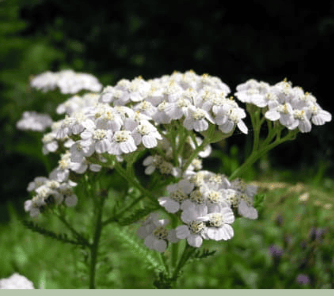
*Yarrow (pictured at the top of this newsletter) is in bloom in my areaat the time of writing this newsletter. It has a tasty, but strong, flavor. I would probably mix it with something milder like chamomile to make a tea. If you do try to find some, do careful research so you can distinguish it from Queen Anne’s Lace and POISON HEMLOCK. Queen Anne’s Lace is edible. POISON HEMLOCK WILL KILL YOU.
Please reach out to me if you have any herbal questions! Let me know if this is helpful, or if there any improvements I can make to this newsletter! And if you know someone who might benefit from this newsletter, please forward it!
Your Herbal Ally,
Heather
I know I am not the only one who is overwhelmed by appeals to become a paid subscriber, so I have decided NOT to put my writing behind a paywall. However, if you would like to show appreciation for my work through a financial contribution like you might tip a busker in the train station, you can do so here: https://buymeacoffee.com/heatherniemisavage
P.S. If you’d like to get your own FREE copy of “14 Herbs Musicians Need NOW.” go to this link: https://heather-niemi-savage-music.kit.com/14_herbs_musicians_need_now
P.S. if you would also like to be on my music-related monthly digest, subscribe here: https://heather-niemi-savage-music.kit.com/19ebe7c431
Remember to do research and speak to a doctor about your particular situation before using herbs. The herbal education I provide does not substitute for advice from a healthcare professional.
Herbs will not make up for a poor lifestyle. We must first take care of ourselves through a healthy lifestyle with a proper amount of sleep, nutritious food, regular exercise and avoiding harmful substances as much as possible.
 Herbs for Musicians
Leave a comment